
Failure Evidence of the Willow Creek Model
For too long the evangelical church has gone soft on sound exposition of Scripture and the faithful teaching of systematic theology and replaced it with the felt needs of people and joining various social causes. Stephen Wellum https://www.crossway.org/articles/an-open-letter-to-the-evangelical-church-on-christology/ Continue reading Failure Evidence of the Willow Creek Model
Ephesians (Classical Theology Course) — The Scriptorium Daily
Talbot School of Theology’s Master of Arts in Classical Theology is mostly composed of three kinds of courses: Commonplaces (major doctrines); Master Practitioners (significant theologians); and Sacred Page (books of Scripture). Since the entire MA is designed to treat Scripture as “that toward which all studies in divinity move,” these Sacred Page courses are especially… Ephesians (Classical Theology Course) — The Scriptorium Daily Continue reading Ephesians (Classical Theology Course) — The Scriptorium Daily
Palestine under Roman Rule — Bible Mapper Blog
At the time of Jesus’ birth, the land of Israel (now called Palestine by the Romans) was ruled by the Romans, who had granted Herod the Great the title of “king” over the region. His domain included most of the land that once belonged to Israel. After his death, the Romans granted Herod’s wishes that… Palestine under Roman Rule — Bible Mapper Blog Continue reading Palestine under Roman Rule — Bible Mapper Blog
The Essenes in Profile
Cannabis Medication
10 Maps of The Sinai
Christian Networks and the Circulation of Christian Books — The Textual Mechanic
Sailing ship, 1st cen. AD (Pompeian tomb of Naevoleia Tyche Museo Della Civiltà Romana)I recently learned of a fascinating account of Christians responding in various ways to Roman Imperial persecution in an excellent chapter by Jakob Engberg in a recent work.”Caring for African Confessors in Exile: the Ministry of Numeria and Candida during the Decian… Christian Networks and the Circulation of Christian Books — The Textual … Continue reading Christian Networks and the Circulation of Christian Books — The Textual Mechanic
Pie in the Sky
What does it profit to gain the whole world yet forfeit one’s soul? This present earth is filled with devils the hymn writer tells us (A Mighty Fortress is Our God). In the book of Job, Satan describes himself as traversing the earth back and forth and roaming on it (Job 1.7). Also, in Ephesians (6.12) it speaks of rulers and authorities over this dark … Continue reading Pie in the Sky
The Seven-fold Armor of God
Eph. 6.10-18 records Paul’s admonition to deploy weapons, both defensive and offensive, in the struggle against evil. The idea of both types of weapons comes from the list itself where these descriptions denote either offensive or defensive purposes. Also, in 2Cor. 6.7, Paul instructs to use “weapons of righteousness on the right and left.” It doesn’t take much insight to see the typical soldier of … Continue reading The Seven-fold Armor of God
Understanding the Olivet Discourse Mt. 24-25, Lk. 21
Some folks wonder whether this teaching of Jesus refers to the end of days or whether it was fulfilled in 70 C.E. when Jerusalem and its Temple was destroyed. Jesus speaks to both times in His discourse but Matthew’s account only deals with the end times and he constructs the account for this purpose. Luke, on the other hand, records both events in 21. 5-36. … Continue reading Understanding the Olivet Discourse Mt. 24-25, Lk. 21
The Easiest Bible Reading Plan
If the goal is to read through the bible in a year (a good and commendable goal), then one only needs to read three chapters, more or less, each day starting with Genesis. Here is a schedule to roughly track one’s progress: Click to access straightthrough.pdf As a young Christian I read through the New Testament in a month and recall the adoption of favorite … Continue reading The Easiest Bible Reading Plan
The Church Telling the Pastor What to Do
“Tell Archippus: ‘See to it that you complete the ministry you have received in the Lord’” (Col. 4.17) Colossians was written to the church whom Paul previously ministered to and no pastors are mentioned. If the Colossians did have a pastor, it was probably Archippus who was located in Laodicea, it seems. The churches of Colossae, Hierapolis, and Laodicea were located relatively close to each … Continue reading The Church Telling the Pastor What to Do
No Music in Either Synagogue or Early Church
Is it important what we do and how we do it when thinking about church services? I think its vitally important or we will slip into either mysticism or hypocrisy. The Jerusalem Temple had music to accompany its mysterious symbolism and redemptive themes expressed in shadows but not the synagogue. Both the synagogue and early church service were devoid of congregational singing and musical instrumentation. … Continue reading No Music in Either Synagogue or Early Church
Moses Marries a Cushite
The whole chapter of Numbers 12 deals with the incident where Aaron and Miriam speak against Moses because of his Cushite wife. She was a black woman who had presumably attached herself (or her family attached themselves) to the Israelites after witnessing the contest between the Lord and the Egyptians. Here is a study of the biblical Cushites: http://www.asor.org/anetoday/2020/12/cushites-hebrew-bible Miriam was struck with a condition … Continue reading Moses Marries a Cushite
Discussions with the Diggers: Dr. Leen Ritmeyer — Bible Archaeology Report
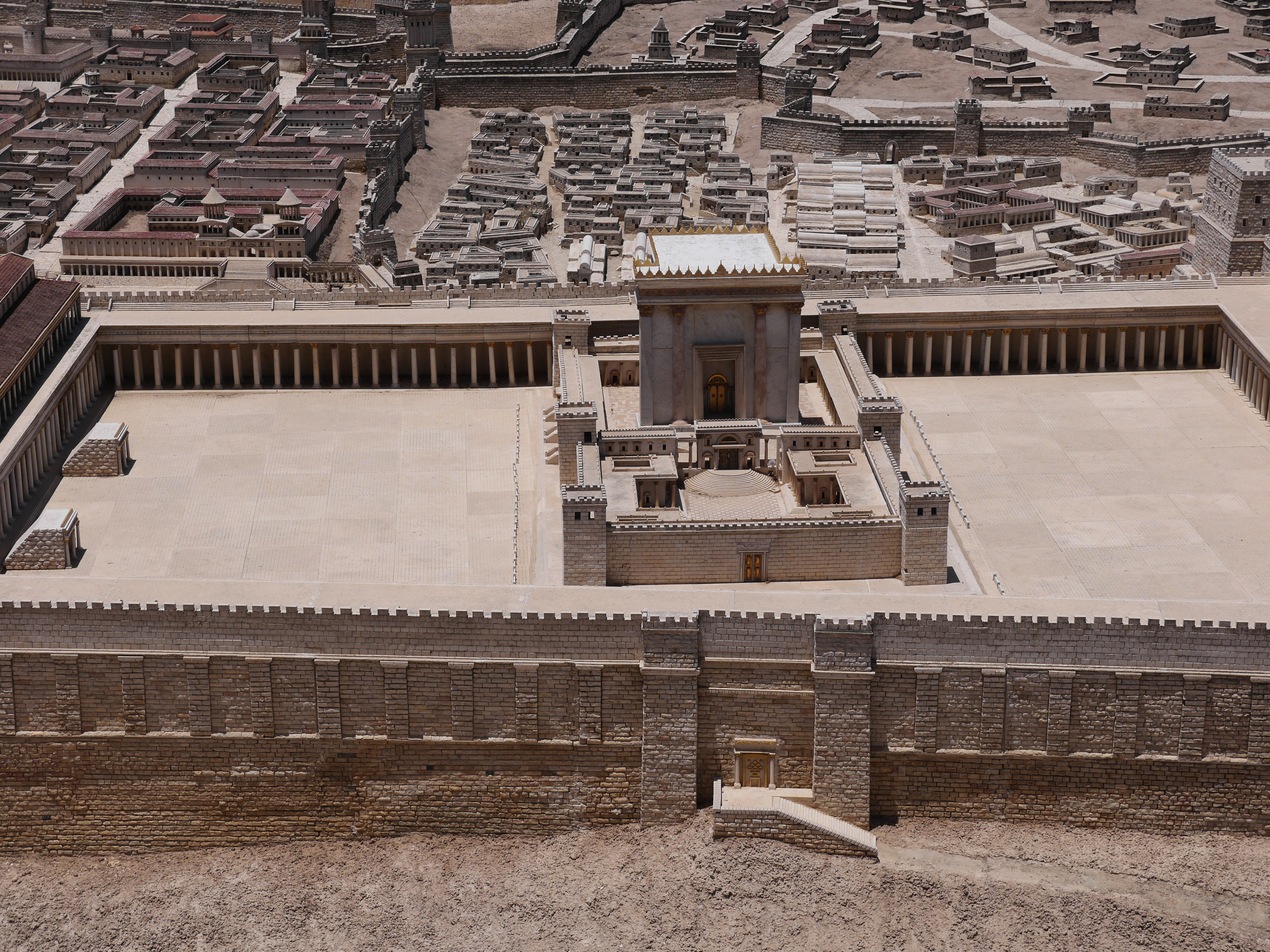
One of the things I love about Discussions with the Diggers, is learning from experts about different biblical sites. My next guest is the world’s leading authority on the Temple Mount. Dr. Leen Ritmeyer is an archaeological architect who has been involved in all of Jerusalem’s major excavations. He was chief architect of the Temple […] Discussions with the Diggers: Dr. Leen Ritmeyer — Bible Archaeology … Continue reading Discussions with the Diggers: Dr. Leen Ritmeyer — Bible Archaeology Report
Not Knowing Anyone According to the Flesh
From now on, therefore, we regard no one according to the flesh. Even though we once regarded Christ according to the flesh, we regard him thus no longer. (2Cor. 5.16) https://www.goodnewsarticles.com/Sep06-3.htm Excerpt: So, “to know someone according to the flesh,” really means to know them from the perspective of my natural thinking – which would be to view them from the perspective of myself as the … Continue reading Not Knowing Anyone According to the Flesh
Were Early Christian Scribes Untrained Amateurs? — Canon Fodder
In the ongoing debates about the reliability of early Christian manuscripts, and whether they have been transmitted with fidelity, it is often claimed that early Christian scribes were amateurs, unprofessional, and some probably couldn’t even read. In Michael Satlow’s book, How the Bible Became Holy (Yale, 2014), this same sort of argument appears (for my… Were Early Christian Scribes Untrained Amateurs? — Canon Fodder Continue reading Were Early Christian Scribes Untrained Amateurs? — Canon Fodder
182. The Dogma of the Bodily Assumption of Mary, 70 Years After — Vatican Files
The 70th anniversary of the day that the dogma of the bodily assumption of Mary was promulgated passed almost unnoticed. It was November 1, 1950 that Pius XII, with the apostolic constitution Munificentissum Deus, solemnly pronounced the latest Marian dogma, which is also the last dogma of the Roman Catholic Church. In it, Roman Catholicism… 182. The Dogma of the Bodily Assumption of Mary, 70 Years … Continue reading 182. The Dogma of the Bodily Assumption of Mary, 70 Years After — Vatican Files
Seneca: The Fate of an Unused Bookroll — The Textual Mechanic
There has been a lot of talk in recent years on the length of time an ancient book, or even “autograph” may have been in use. I briefly addressed this topic in “Myths and Mistakes in New Testament Textual Criticism,” Chapter two “Myths About Autographs.” In that chapter I cite a comment from the second… Seneca: The Fate of an Unused Bookroll — The Textual Mechanic Continue reading Seneca: The Fate of an Unused Bookroll — The Textual Mechanic
Hating Vain Thoughts — The Scriptorium Daily
Just a quick note here on the blog, to hold a link to a helpful sermon from Richard Chenevix Trench, “On the Duty of Hating Vain Thoughts.” It’s from an 1886 collection of sermons freely available at various places online, but I excerpted the sermon itself and am sharing it (along with my own highlighting)… Hating Vain Thoughts — The Scriptorium Daily Continue reading Hating Vain Thoughts — The Scriptorium Daily
Why Did God Condemn Jehu in Hosea 1. 4-5?
Understanding Human Sexuality
This is a longer read but sets the foundation from O.T. texts as well as N.T. ones to define human existence and show that sex is covenantal in humans by creation. Continue reading Understanding Human Sexuality
Atonement in Heaven
This article argues effectively that Christ presented Himself in heaven for the forgiveness of humanity’s sins. The only quibble I have is that no ancient Jewish or early Christian source labels the high priest’s inner-sanctum blood manipulation an “offering.” https://www.desiringgod.org/articles/our-welcome-to-heaven Lev. 6.30 explains: But any sin offering whose blood is brought into the tent of meeting to make atonement in the Holy Place must not … Continue reading Atonement in Heaven
Abraham’s Camels
Salt Losing Its Savor (Part 2)
Here is Part 1: https://beliefspeak2.net/2014/09/22/salt-losing-its-savor-luke-14-34-35-matthew-513/ The first post was produced nearly 6 years ago and additional thoughts about the reference to “salt” in the scriptures have occurred to me while studying the bible as a whole. Probably the greatest impediment to find meaning in the text is to treat it atomistically, that is to divide or view parts of the bible as unconnected fragments. Instead, … Continue reading Salt Losing Its Savor (Part 2)
Paul and Jesus Disclaim a Divine Council
In him we were also chosen, having been predestined according to the plan of him who works out everything in conformity with the purpose of his will (Eph. 1.11 NIV) In this verse, Paul affirms God’s working in all things, solely by His own will. This, of course, does not mean He cannot teach and interact with angelic beings. It seems appropriate that The Divine would … Continue reading Paul and Jesus Disclaim a Divine Council
181. “All Brothers”: The Unbearable Cost of Roman Catholic Universalism — Vatican Files
L’articolo 181. “All Brothers”: The Unbearable Cost of Roman Catholic Universalism sembra essere il primo su Vatican Files. 181. “All Brothers”: The Unbearable Cost of Roman Catholic Universalism — Vatican Files Continue reading 181. “All Brothers”: The Unbearable Cost of Roman Catholic Universalism — Vatican Files
 beliefspeak2