Jerusalem to Emmaus and Back: An investigation.

A fascinating post by Dr. Bivin reproduced on Holy Land Photos’ blog. David N. Bivin, founder and editor–in–chief of the Jerusalem Perspective has produced a wonderful article A Farewell to the Emmaus Road. Bivin writes: The Emmaus Road narrative is the climax of Luke’s Gospel. In it, two of Jesus’ disciples encounter their resurrected Lord as they follow the road leading west from Jerusalem. Not … Continue reading Jerusalem to Emmaus and Back: An investigation.

Markos reviews Latta: C. S. Lewis and the Art of Writing

Louis Markos teaches English at Houston Baptist University. He also holds a distinguished chair at the school. Prof. Markos gives clear voice to as to how to communicate effectively: say what is meant in concrete and understandable terms. This is fresh air for me. In this review he describes all the benefits of Latta’s work in combing his personal correspondences to analyze Lewis’ work.   … Continue reading Markos reviews Latta: C. S. Lewis and the Art of Writing

Μονογενής in the Church Fathers: A Response to Kevin Giles, Part 5 — The Upper Register

A good summary post by Dr. Irons on how we should think about biblical communication. Also, throughout this series, the importance of church history is revealed. History’s use here by Dr. Irons discloses how these early Christians interpreted their native language and thus gives us valid insights to the Greek text.   Μονογενής in the Church Fathers: A Response to Kevin Giles, Part 5 — … Continue reading Μονογενής in the Church Fathers: A Response to Kevin Giles, Part 5 — The Upper Register

“Only Begotten” or “Unique?”

Most Christians are familiar with John 3.16 which says that Jesus was “only begotten” or some versions: “unique.” So which is it, or possible is it a combination somehow of these two ideas or something else? Lee Irons engages Kevin Giles to note his disagreement with translating the Johannine term (monogenase) which only occurs 5 times in Scripture. These instances of the word however are … Continue reading “Only Begotten” or “Unique?”

132. “The Only Creature Without Sin” – Pope Francis on the Immaculate Conception of Mary — Vatican Files

January 1st, 2017 On December 8th each year, the solemnity of the Immaculate Conception of Mary is celebrated. On this occasion the Roman Catholic Church contemplates the belief that Mary was preserved from original sin. This view had been part of Roman Catholic teaching and devotional practices for centuries, but it was not until 1854… via 132. “The Only Creature Without Sin” – Pope Francis on … Continue reading 132. “The Only Creature Without Sin” – Pope Francis on the Immaculate Conception of Mary — Vatican Files

Samson and Delilah (the Israelite Woman) — With Meagre Powers

Here is a post by Prof. Athas which I wanted to share earlier. I found his premise convincing that Delilah was an Israelite, and the connection to the Danites and Micah, intriguing.   In the book of Judges, we encounter the mighty Israelite judge, Samson. He is perhaps best known for his herculean strength. Yet, he is also known for his weakness for women—especially Philistine … Continue reading Samson and Delilah (the Israelite Woman) — With Meagre Powers

The Debt Atheists Owe Christians (by Larry Hurtado)

Prof. Hurtado has released a snippet of his recent book Destroyer of the Gods. In it he notes the irony (last sentence) that present day atheists have Christians to thank for a reduced workload.   Early Christians were atheists! At least, that’s how some people of the time viewed them in the earliest centuries, and it’s not difficult to see why. Most importantly, they refused … Continue reading The Debt Atheists Owe Christians (by Larry Hurtado)

Jacob’s Sheep

After a few thousand years absence, “Jacob’s Sheep” have returned to Israel—from Canada! From The Times of Israel: ” Biblical sheep in Israel for first time in millennia” The breed received the name “Jacob sheep” based on Genesis Chapter 30, where Jacob talks about leaving his father-in-law Laban’s home and taking part of the flock […] via Jacob’s Sheep Arrive in Israel — HolyLandPhotos’ Blog Continue reading Jacob’s Sheep

Passengers or The Bus: Conceptualizing the Church

Steve Hays has posted a fine way to think about the community of Jesus followers with the illustration of vehicles and those who take them. What is the best way to formulate the abstract idea of “church” that will be in concert with the ideas of “members of one body” (1 Cor. 12.12), “living stones” comprising a spiritual house (1 Peter 2.5), and the various … Continue reading Passengers or The Bus: Conceptualizing the Church

The Cyrus Cylinder’s Intersection with The Bible

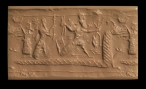
Chris Rollston wrote an interesting post back in 2013 which covers much ground with emphasis on the Cyrus Cylinder. He gives a nice historical overview and discusses recent analyses of the Cylinder’s significance.    Cyrus the Great of Persia is called “Meshiah” (that is, “Anointed One,” “Messiah”) in the Hebrew text of Isaiah 45:1 and Yahweh’s “Shepherd” in Isaiah 44:28. This sort of grandiose language … Continue reading The Cyrus Cylinder’s Intersection with The Bible

New Testament Transmission

Generally speaking, it was previously thought that most copyists of Christian sacred texts were unimpressive amateurs given how rapid and wide-spread the message of the Messiah dispersed during the middle and later half of the first century. I have stated as much in some blog posts. Of course, I need to acknowledge further research and, if needed, be corrected with subsequent evidence. I am now happy to report … Continue reading New Testament Transmission

Credibility: A Terrible Thing to Lose

John William Burgon became Dean of Chichester Cathedral in 1876 and is usually referred to as “Dean Burgon.” He is remembered for his passionate defence of the historicity and Mosaic authorship of Genesis and of Biblical inerrancy in general. (Wikipedia) While he may be commended for his defence of the Bible’s veracity, he was also somewhat simplistic and took seemingly leaps of faith where empirical evidence … Continue reading Credibility: A Terrible Thing to Lose

Where the Romans breached Jerusalem wall — Ferrell’s Travel Blog

There is abundant evidence of the presence of the Romans in Jerusalem and the land they would later call Palestine. Now comes specific evidence of the place where Titus’ army breached the Third Wall of the city. The Israel Antiquities Authority released this information earlier today. — “ — Impressive and fascinating evidence of the […] via Where the Romans breached Jerusalem wall — Ferrell’s Travel … Continue reading Where the Romans breached Jerusalem wall — Ferrell’s Travel Blog

NT Inscriptions — Gallio Proconsul of Achaia (Acts 18:12)

At one time I saw an advertising slogan which, to me, seemed very effective: “The closer you look, the better we look.” This slogan invited the prospective buyer to carefully examine the product on offer  to see the manufacturer’s attention to the minute details of the item. This same slogan may be applied to the bible. We moderns possess a staggering wealth of relevant historic … Continue reading NT Inscriptions — Gallio Proconsul of Achaia (Acts 18:12)

New Testament Inscriptions — Erastus of Corinth (Acts 19:22; Romans 16:13; 2 Timothy 4:20) — HolyLandPhotos’ Blog

Part of a pavement found near the theater of Corinth which mentions “Erastus” who was the aedile of the city. An “aedile” was in charge of the financial matters of the city — and was very wealthy. The pavement was laid about A.D. 50. The New Testament book of Romans was written by Paul from […] via New Testament Inscriptions — Erastus of Corinth (Acts 19:22; … Continue reading New Testament Inscriptions — Erastus of Corinth (Acts 19:22; Romans 16:13; 2 Timothy 4:20) — HolyLandPhotos’ Blog

Gate Complex at Tel Lachish, Israel and Hezekiah’s Reforms Connected by Archeological Discovery

A truly fascinating discovery occurred recently in the field of Biblical Archaeology. The suggestion of symbolic defilement by use of representative articles at worship sites informs much to us about ancient cultic practices. Of course it validates Israel’s ancient existence (some groups deny Israel existed in antiquity) and is  consistent with the biblical record. Haaretz; Hamevaser; The Jerusalem Post, September 29, 2016 An Israel Antiquities Authority … Continue reading Gate Complex at Tel Lachish, Israel and Hezekiah’s Reforms Connected by Archeological Discovery

129. Roman Catholic Theology after Vatican II: An Interview — Vatican Files

October 1st, 2016 Excerpts of an interview published in Unio Cum Christo. International Journal of Reformed Theology and Life, Vol. 2, No. 2 (October 2016). Since Martin Luther’s reformation, three major events in the life of the Roman Catholic Church have marked its reaction not only to Protestantism but also to developments in the modern… via 129. Roman Catholic Theology after Vatican II: An Interview — … Continue reading 129. Roman Catholic Theology after Vatican II: An Interview — Vatican Files

Genesis 19: Has Lot Lost The Plot?

George Athas claims that Gen. 19 uses the rhetorical device of “detail omission” to tell its story and to “surprise” the reader later with additional information  with which the reader can finally make an informed decision regarding the “righteousness” of all the actors in the account. I find the argument Dr. Athas has put forward convincing and pass it along. This view aligns very well … Continue reading Genesis 19: Has Lot Lost The Plot?

House of Cards?

By Michael Patton (ThM, Dallas Theological Seminary) http://credohouse.org/blog/christianity-falling-down One of the first things that I have to teach my students this: The Christian faith is not a house of cards. Most assuredly, there are foundational issues of the faith that, if taken away, will destroy Christianity. Issues like the existence of God (there is no such thing as a “Christian atheist”), the resurrection of Christ, the … Continue reading House of Cards?

Bible Texts Written Earlier — Streams in the Negev

From tests done on archeological finds near Arad in the Negev, scientists are reconsidering the literacy skills of the Jewish people with respect to dating the writing of historical writings in the Bible: http://www.timesofisrael.com/new-look-at-ancient-shards-suggests-bible-even-older-than-thought/ via Bible Texts Written Earlier — Streams in the Negev       Continue reading Bible Texts Written Earlier — Streams in the Negev

127. Is the Ecumenical Martin Luther the Real Luther? — Vatican Files

August 1st, 2016 As the 500th anniversary of the Protestant Reformation is approaching, it is no surprise to find books wanting to offer fresh accounts of Martin Luther’s theology and legacy. Who was this man? What was his message then and how do we understand it five centuries after? Walter Kasper’s recent volume on Luther… via 127. Is the Ecumenical Martin Luther the Real Luther? — … Continue reading 127. Is the Ecumenical Martin Luther the Real Luther? — Vatican Files

Bible Word Studies (Greek)

In a post reviewing an intermediate grammar the reviewer notes the authors’ guidance towards the exercise: Prioritize Synchrony over Diachrony – here the importance of contemporary meaning and semantic shift is highlighted, along with the dangers of the etymological fallacy (i.e., thinking the history of a word’s meaning has any necessary link to the word’s current meaning – it doesn’t). Do Not Confuse Words and Concepts … Continue reading Bible Word Studies (Greek)

Jewish Rabbis and Gen. 3.15

[Apology for the formatting-it seems the software has undergone a change in the platform (WordPress) rendering it onerous to editing] Here is an illuminating study highlighting some history of how Rabbis approached Gen. 3.15 and Gen. 4.1. I knew that Gen. 4.1 was a reference back to the Promise in 3.15 but didn’t know all the issues of the grammar. HaDavar Ministries has a good … Continue reading Jewish Rabbis and Gen. 3.15

Hurtado Engages Wright

I’ve now uploaded the pre-publication form of my essay in a recent volume engaging N.T. Wright’s massive two-volume work on the theology of Paul, my essay focusing on Wright’s claim that the theme of “YHWH’s return to Zion” functions as “the catalyst” for Christology in the New Testament. The upload is available here. I’ve mentioned […] via YHWH’s “return to Zion” — Larry Hurtado’s Blog A fascinating … Continue reading Hurtado Engages Wright