Ancient Cush

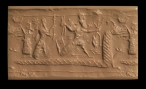
Our last couple of posts have dealt with Pharaoh Tirhakah, the Cushite (Ethiopian) king of Egypt’s 25th dynasty, and mentioned by name in 2 Kings 19:9, in correction with Judah’s good King Hezekiah, and the Assyrian King Sennacherib. We noted, “In some translations (i.e., NKJV) Tirhakah is said to be king of Ethiopia. “Ethiopia” here refers to […] “I Am Nubian” — Leon’s Message Board Continue reading Ancient Cush

Methodological Naturalism and Divine Inspiration

Here is a post by Craig Carter I believe is helpful. It’s not that I completely ‘buy in’ to all that the Credo guys are saying, because I do have differences with them. I am preparing a post that, I hope, will show addition instead of an either/or formulation that is demanded by some. Nevertheless, this article is agreeable. Methodological Naturalism and Divine Inspiration – … Continue reading Methodological Naturalism and Divine Inspiration

You Can’t Fix the Church

Jesus was clear as to who builds His Church: Himself. What is “radically wrong” with the church is no different than what is wrong with all believers throughout history, including Abraham, Isaac, and Jacob. After Abram tried his own devices, God told him to walk with Him and be perfect (implying that he was not perfect previously; see Gen.17.1). This is the process of sanctification … Continue reading You Can’t Fix the Church

Dispensational or Covenantal?

Stephen Wellum continues his labors of bringing precision to the understanding of the Biblical Covenants. He doesn’t claim that his formulation is the “end of the discussion,” but rather interacts with scripture to note variances in the two competing synthetic theological systems. I think he identifies crucial problems in both inorganic systems and brings scriptural alternatives. Dispensational or Covenantal? | Desiring God Continue reading Dispensational or Covenantal?

Pharaoh Tirhakah-2Kings 19.9

In our present post we further consider Tirhakah, the Cushite (Ethiopian) Pharaoh mentioned in 2 Kings 19:9: “Now Sennacherib received a report that Tirhakah, the Cushite king of Egypt, was marching out to fight against him. It is fascinating (and illuminating) when there are other historical records, inscriptions, and artifacts which coincide with biblical persons […] Pharaoh Tirhakah, cont’d — Leon’s Message Board Continue reading Pharaoh Tirhakah-2Kings 19.9

Erasmus and His Texts

The statue of Erasmus at the University Rotterdam is the oldest statue in the Netherlands. Photo from FlickrThe Greek New Testament published in Basel (Switzerland) in 1516 was the greatest achievement of the magnificent Dutch philosopher, philologist, and Catholic theologian Erasmus of Rotterdam (ca. 1466–1536). At that time in Western Europe, the Latin Bible was… Erasmus and the Search for the Original Text of the New … Continue reading Erasmus and His Texts

“They Will All Be Taught of God” (Jn. 6.45)

Jesus, in John 6.45, says the writings of the prophets (note the plural), teaches that the future New Covenant will be different from the Mosaic Covenant. A direct quotation could be Is. 54.13 where it says: All your children will be taught by the Lord, and great will be their peace (NIV). The first verse of Isaiah 54, Paul quotes in Galatians 4.27: Be glad, barren … Continue reading “They Will All Be Taught of God” (Jn. 6.45)

Rachel’s Tomb and “Perat” of Jer. 13.4-7

Here is an article discussing Rachel’s burial place while also mentioning an area of Perat where Jeremiah was instructed to bury the linen belt. The Perat area (around Ramah), is more accessible to Jeremiah than the Euphrates area which would have taken several months to reach. Rachel was most likely buried in her son’s tribal area of Benjamin which was not established until hundreds of … Continue reading Rachel’s Tomb and “Perat” of Jer. 13.4-7

Hacksilber and Coinage Commerce in Antiquity

Summary: Silver pieces discovered demonstrate robust trade routes and use of currency in Israel and the surrounding areas, 500 years earlier than previously thought. Abraham listened to Ephron, and Abraham weighed out for Ephron the silver that he had named in the hearing of the Hittites, four hundred shekels of silver, according to the weights… Silver Hoard Discovery Reveals Israel’s Oldest Currency — Patterns of Evidence Continue reading Hacksilber and Coinage Commerce in Antiquity

Complete Excavation of Biblical Pool of Siloam Announced

Summary: The famous, biblical Pool of Siloam will finally be revealed for the first time in a full excavation and visitors are welcome to watch the process. “Go,” he [Jesus] told him, “wash in the Pool of Siloam.” So the man went and washed, and came home seeing. – John 9:7 (NIV) Famous Pool of… Complete Excavation of Biblical Pool of Siloam Announced — Patterns of … Continue reading Complete Excavation of Biblical Pool of Siloam Announced

Does God Create Imperfection or Does He Merely Allow It?

Here is an good article by Peter Leithart about how woman “perfects” man. In an aside, Leithart speaks of how original creation was “imperfect” and “inglorious:” Creation is a series of speeches and actions to perfect the original imperfection and to glorify the relatively inglorious. In Genesis 1, ‘elohim lights, forms, and fills to transform the original tohu-w’bohu into a brightly-lit, ordered, teeming cosmos. I must disagree with Leithart … Continue reading Does God Create Imperfection or Does He Merely Allow It?

The Nascent Christian Community were Actors not Spectators

Here is an article by Michael J. Kruger showing that the initial impulse of Christians was to spread the Gospel. Indeed, one of the greatest truths I ever learned was that it was ordinary Christians who first spread the Good News, not the elites. This case is found in Acts 8. 1-4. After Stephen’s martyrdom, a fierce opposition developed against the Christians: And there arose … Continue reading The Nascent Christian Community were Actors not Spectators

Isaiah 9 Resources

Here is collection of posts by Jason Engwer along with links to issues in Isaiah 9: The first seven verses of Isaiah 9 are highly significant, but usually underestimated, in a lot of important contexts. They have implications for Jesus’ identity, how he viewed himself, who he claimed to be, how he was perceived early on, the continuity between the gospels’ accounts of his childhood … Continue reading Isaiah 9 Resources