

“Becomming Like Children,” Implies Death to Self-Mt. 18.3
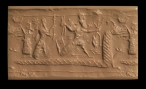
First Temple Seals Unearthed
Jerome’s View of Divine Punishment-Is. 66.24
A Ministry Cannot Solely Define a Christian
Faith with Uncertainties
The Doxology of Mt. 6.13 and Erasmus’ Editorial Choices
Let No One Disqualify You, Insisting on Asceticism
Signs, Shadows, Symbols, and Types in the O.T. of Jesus
The Spirit Who Works in the Disobedient-Eph. 2.2
The Brief Reign of Shalmanesar V
Blessings and Curses of Social Media
Historicity of the Bible
Following Jesus is Not Difficult-Mt.7.13-14
Enter through the narrow gate. For wide is the gate and broad is the road that leads to destruction, and many enter through it. But small is the gate and narrow the road that leads to life, and only a few find it (NIV). The NIV captures the meaning better than the ESV for this verse in Matthew’s Gospel. The ESV rendering has: Enter by the … Continue reading Following Jesus is Not Difficult-Mt.7.13-14
Is Jesus’ Return Soon or Swift?
Many English bibles have problamatic renderings of the Greek word tachu in the Apocalypse of John (the book of Revelation). While I don’t know when Jesus is returning, I believe He didn’t say “soon” in 2.16, 3.11, 11.14, 22.7, 12, 20 of Revelation. The word tachu, in virtually every other instance in the N.T. (12 occurrences) is usually, (in the English), correctly translated: “quickly.” Before … Continue reading Is Jesus’ Return Soon or Swift?
A “Gift” Implies Newness and Discovery
As each has received a gift, use it to serve one another, as good stewards of God’s varied grace: whoever speaks, as one who speaks oracles of God; whoever serves, as one who serves by the strength that God supplies—in order that in everything God may be glorified through Jesus Christ. To him belong glory and dominion forever and ever. Amen (1Pe. 4.10-11 ESV). The New … Continue reading A “Gift” Implies Newness and Discovery
The Bible Stands Like a Rock Undaunted ‘Mid the Raging Storms of Time
Historicity of Jewish Commemoration and Gospel Witness-John 10.22
A Picture of Desperate Plea, Grace, and Pardon
Typology in the Bible
Christian Freedom From the Temple Tax-Mt. 17.24-27
Jesus and His disciples didn’t really need to pay the half-shekel Temple Tax. Jesus and Peter paid it, however, so as to not offend the Jews’ religious sensibilities (see Mt. 17.24-27). Jesus, of course, didn’t need “to make atonement for His life” (Ex. 30.16c ESV). Also, by logic (since it is God’s Temple), His redeemed children are free from paying it. The yearly half-Shekel, as … Continue reading Christian Freedom From the Temple Tax-Mt. 17.24-27
The Authoritative Tomb Seal
Empirical Evidence for the Faith and Resurrection
Why are Christians Ready to Die for Jesus?
Eyes on the Prize-Phil. 3.14-15
https://www.jvfesko.com/blog/2024/3/25/swagger I press on toward the goal for the prize of the upward call of God in Christ Jesus. Let those of us who are mature think this way, and if in anything you think otherwise, God will reveal that also to you (ESV) In the mind, having arrived at a place we become stationary. This is not what God intended since His call is upward … Continue reading Eyes on the Prize-Phil. 3.14-15
Thematic Parallels to the Messiah in Scripture
Absence of Evidence is not Evidence of Absence
The Subtle and Serpentine Way
A Brief History of Corinth
The Way of Jesus and the Pharisees Contrasted
https://www.jvfesko.com/blog/2024/3/18/pastoral-ministry-part-4-joy If I could expand on J. V. Fesko’s admonition, I would try to show that the cruciform life is not an option. It’s a good article Dr. Fesko presents to explain that there is joy instead of slavish effort in our walk with Jesus. In fact, if you go about in life with self-focused effort without the joy of the Lord, then, you may … Continue reading The Way of Jesus and the Pharisees Contrasted
 beliefspeak2